
Hats
The Sun-Smart Collection
Click here to edit the text and include the information you would like to feature.

Shoes
Comfort X Design
Click here to edit the text and include the information you would like to feature.

Bags
Transport In Style
Click here to edit the text and include the information you would like to feature.
Hats
The Sun-Smart Collection
Click here to edit the text and include the information you would like to feature.
Shoes
Comfort X Design
Click here to edit the text and include the information you would like to feature.
Bags
Transport In Style
Click here to edit the text and include the information you would like to feature.
- Experience Architect -

UI/UX
Make PT a Lifestyle
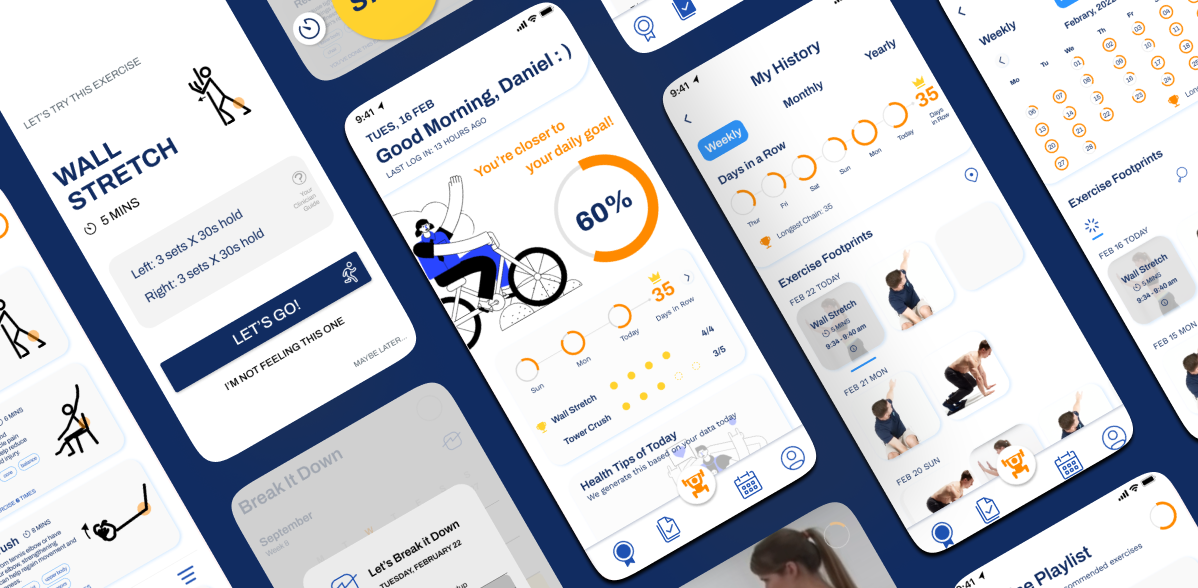
People always take at-home PT exercise as an extra chore to their normal in-clinic exercise plan and question its effectiveness. Our digital toolkit "Part of your life" is aiming to twist that stereotype of the home exercise program and make it personalized, encouraging and informative enough to become a natural piece of people's everyday life. Part-of-life finds the moments from your busy schedule and starts your self-caring journey.
The contents of this project are subject to NDA and password protected. No repost without consent is allowed.
Project type: UI/UX Design, Design Research
HC Interaction Design studio (10wks)
Sponsor: Project Flex (healthcare company providing
physical therapy services)
My role: UX Designer, Design Researcher, Visualization Lead
Skills: Design Research & Synthesis, Prototyping, Storytelling
Figma, Mural, Adobe PS & Ai

Rita Wang
Experience Design
Social Impact

Annie Thomas
Product Design, Design Engineering

Liam Rolle
Consulting, Healthcare,
Design Research
We leveraged contemporary tools and methods from industry to build competency and understanding of common UX/UI artifacts utilized in the creation of digital products, including but not limited to personas, customer journey maps, user stories, storyboards, flows, wireframes, visual comps and clickable prototypes.
During this 10 week project, we research, concept, design, prototype and test interface solutions that meet the needs of business and audience stakeholders. At the end of this design journey, we created a physical therapy "self-care toolbox" to help people unleash progress and possibility on their own through instant, encouraging and effective after-clinic exercises.
PARTNERED WITH A PHYSICAL THERAPY PROVIDER (PROXY CODE NAME: PROJECT FLEX), WE REVENT THE DIGITAL TOOLKIT FOR PATIENTS TO SELF-DIRECT THEIR PATHS TO HEALING.
PROBLEM

Physical Therapy is no longer a rare thing that people have limited access with.
Despite strong awareness & the many people already go to the in clinic to get physical therapy sessions, the idea of PT suffers from the universal misperception that you need to have a doctor ’s referral, be an athlete or suffering senior, or pre/post-surgery in order to be worthy of physical therapy & its benefits. As one of the industry leaders, our clients want to re-educate the masses on the accessibility & benefits of PT, tailoring down three the most important areas that will enhance patients' experience with PT: Digital Triage, Home Exercise Program and Post PT Relationship.
We want the patients to start healing now and further prevent any future issues in the long term.
RESEARCH
Competitive Market Research
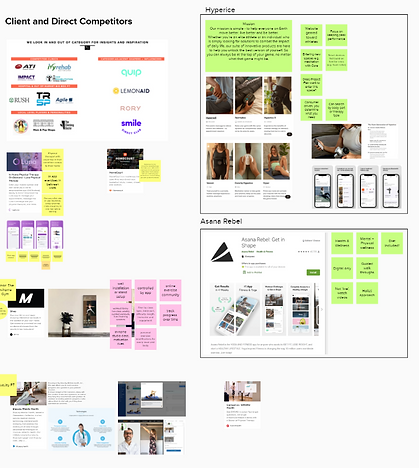

To better understand the market, our team researched current tools and services used by patients and health care providers to promote adherence and wellness. We also assessed category adjacent influencers that were not necessarily in the physical therapy space but were pushing the boundaries of how they engaged their users.

Service Blueprint of Patient using digital PT tools
Ethnographic Research

Based on personal experience and secondary research, we entered our user research with some preconceived notions of what the greatest challenges to exercise adherence for patients may have been. We hypothesized that patients had a decline in adherence due to ineffective resources, unengaging printed exercise guides, lack of accountability, and lack of confidence in the exercise steps. Our discussion guide addressed these hypotheses and other questions regarding home exercises.
SYNTHESIS
Key Insights
What we’ve discovered about what people want and need?

Patients feel confident doing their at-home exercises after being guided through the process with a therapist in clinic but don't fully understand the role at-home exercise plays in their recovery
"AM I DOING THIS RIGHT?"
Patients are confident doing at-home exercises but are often unsure of the rationale

Patients often only recognize the true magnitude of their physical progress when they can see the sum of their incremental improvements over the course of their home exercise program
"MY THERAPIST WILL TELL ME"
Patients struggle to track the progress with their home exercises

At-home exercise competes with day-to-day life and lacks the dedicated mental/physical framing of an in clinic session as well as the accountability and motivation provided by a therapist.
"I DON'T FEEL THE MOTIVATION"
At-home exercise's biggest hurdle is to initiate a session
HOW MIGHT WE
connect complementary products and services to increase in-home exercise adherence and empower people to live better for a lifetime?
Guiding Principles
What are the design directives we take into our concepts to meet the needs?

PERSONALIZED
Users should feel like their specific needs and recovery plan are central to the solution.

ENCOURAGING
Provide users with the motivation required to start an at-home exercise session.

INFORMATIVE
Users should have access to information about the method and rationale of their exercises.

QUANTIFIABLE
Users can understand better their daily progress and gain motivation to continue exercising with joy.
IDEATION
Brainstorming
Keyed into our insights and guiding principles, we sketched to explore the features we should include.


Wire Frames
Going forward with brainstorm ideas, we pinned down on three major features.
Flex to Know
Provide patients with exercise tracker that contains relevant info and monitors progress.
This feature would allow users to take a deeper dive into their exercise plans and learn what muscle groups are targeted and the point of that exercise.
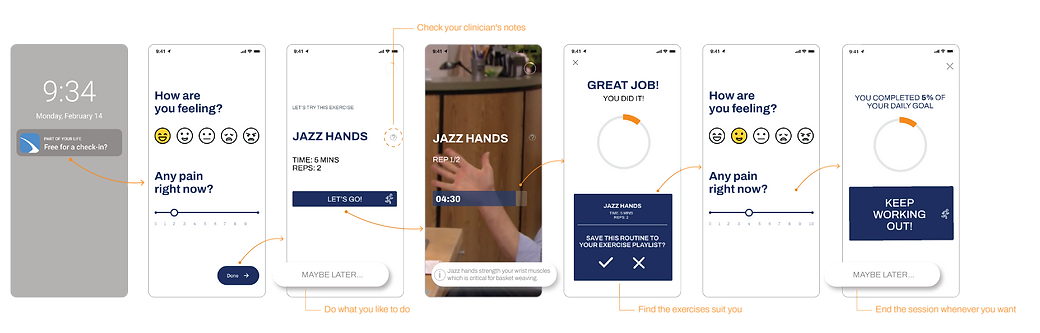
Part of Your Life
Learn about the users' day-to-day life and plan out exercises that fit in their routines smoothly.
You don't need to be at home to start a session but wherever you are, whenever it is, you can start an exercise with ease.

Head Space
Offer patients with easy access to exercise sessions to motivate them to kick off their exercise sessions. Short exercise sessions help patients get into the mental space to get started.

User testing to gain feedback to improve


FINAL PROTOTYPE

Meet Daniel
-
UX Designer
-
Recently hurt his lower back
-
Sees his therapist twice a week in clinic
-
Therapist updates his weekly exercise list
-
Checks his homework from Flex app

What does his typical day look like?

Break It Down
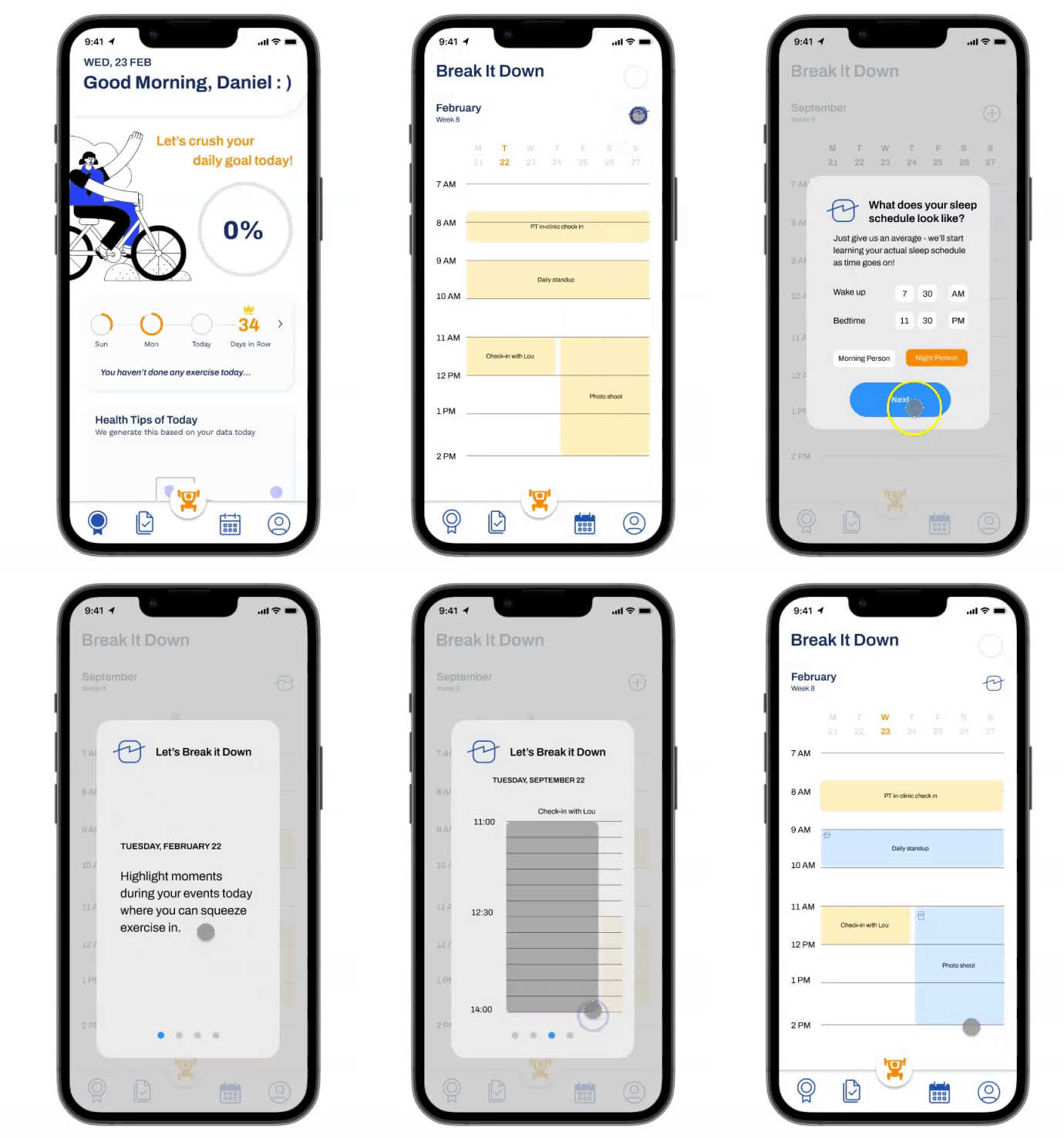
As a designer, Daniel starts his day by opening his macbook in his office. He usually sits in for an entire day and has big block of time settled just for one work.
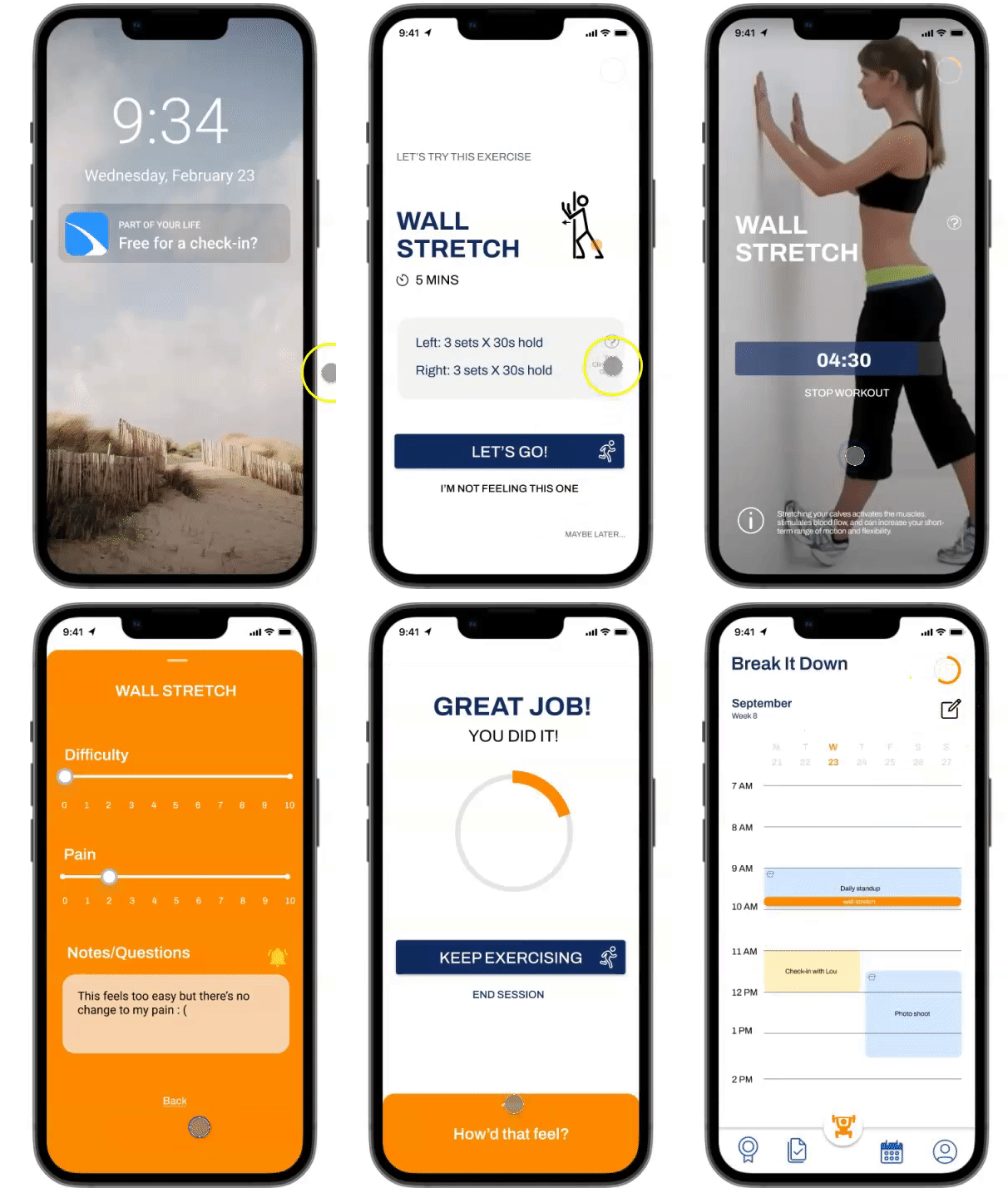
Daniel opens Flex app in the morning before work and uses "Break it down" feature in the calendar to allow Flex to find exercisable moments for him.
Morning
At Work
Kick Off Start
Around 9:40, Flex reminds Daniel of his first exercise session of the day. Daniel clicks in and picks a right one to start. He checks his clinician's reminders and follows video instructions carefully.
After the session, he leaves notes to help him better check with his clinician on next in-clinic session.
His back feels much better : )
Track your progress
Daniel gets home and opens Flex to check his progress. He is very happy with his in streak number and feel more motivated to keep the good work. While checking his weekly footprint, he realized he still has one exercise left undone, the tower crush.
He tap on the "Start" button to quickly get in the session both physically and mentally.
After Work
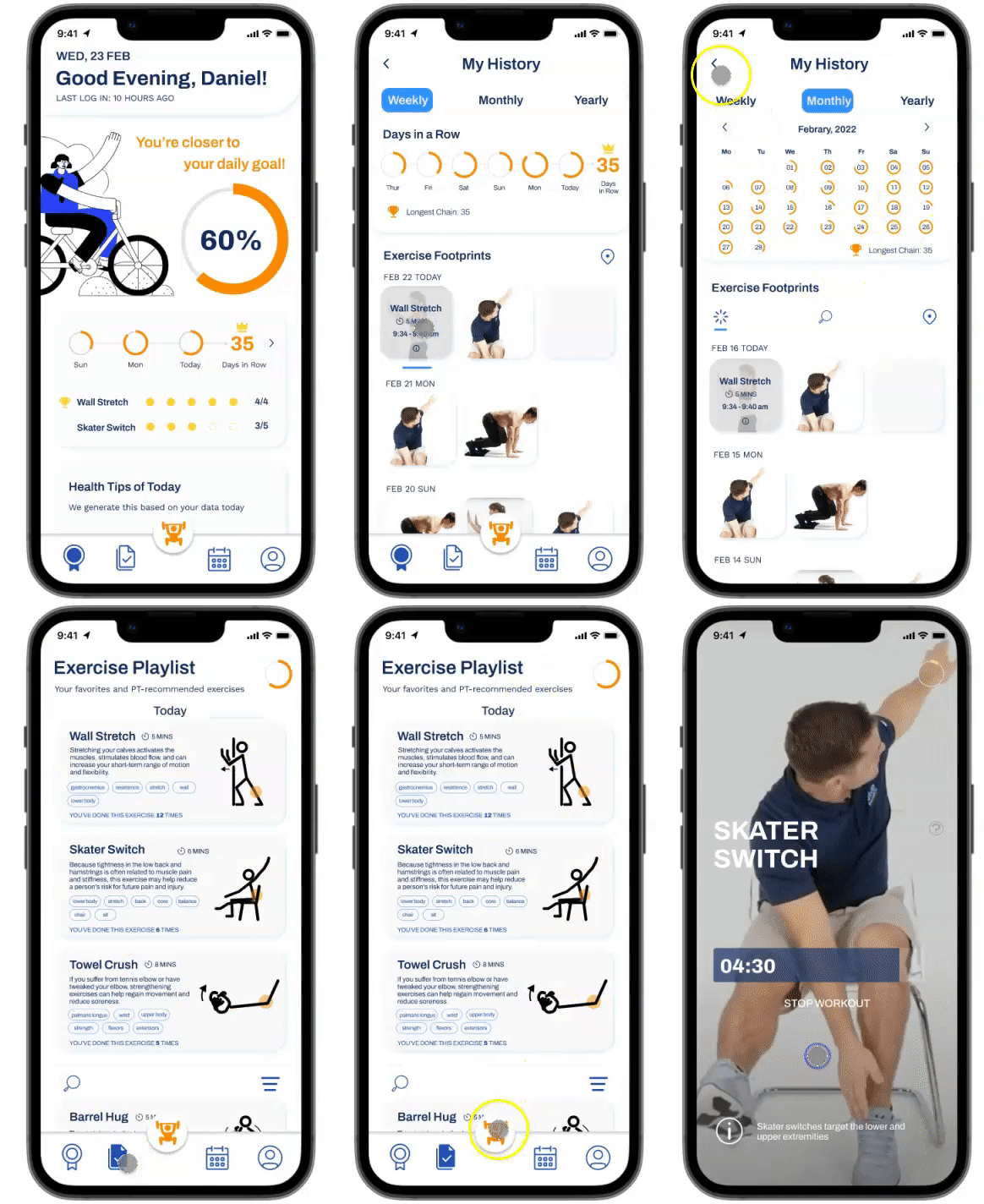

Daniel feels really satisfied with today's exercises. His back is getting better everyday and he looks forward to getting his life back to normal.
Patient Benefits
%201.png)
Flexibility
Increases adherence as exercises fits itself into patient’s busy schedule, reducing the barrier to initiate exercise.

Outcomes
Improves outcomes due to increased adherence

Knowledge
Improves medical literacy as patients understand the rationale behind their prescribed exercises

Tracking
Enables patients to follow their progress over their PT journey.
Flex Benefits

Feedback
Provides data linking pain and difficulty with prescribed exercises allowing for targeted care.

Flexibility
Provides an additional touchpoint for the patient beyond the confines of the clinic.

Lifestyle
Elevates Flex from the discreet events of clinic & home exercise sessions to an integrated lifestyle.

Making exercise a lifestyle
rather than a chore.

Reflection & Conclusion
- As a researcher, allowing yourself to understand what your existing hypotheses are before conducting user research allows you to test biases and lead to previously unrealized insights.
- Creating guiding principles based on research allows you as a designer to create boundaries to brainstorm within leading to more useful and relevant concepts.
- Creating quick sketches and wireframes lets you rapidly visualize concepts without getting caught up in the nitty gritty details like fonts and colors.
- Talking with all the major stakeholders of a product gives a more holistic perspective that would not be acquired by only considering the central user.
- Getting to strong tensions and insights early on in a project will lead to a higher chance of success long-term without having to pivot due to bad research.